Procurement Solutions - @ Power of Internet

Showing posts with label Food. Show all posts

Wednesday, 3 June 2015

Yummy Mangoes!

When I was a kid, I used to wait for summers only for two reasons – Long Summer Vacation and Yummy Juicy Mangoes.

Mango, King of Fruits and National fruit of India, is known for its luscious taste.

Apart from their delicious taste, mangoes are also known for their cultural values and importance. Mango leaves are used to decorate doors in Indian houses during festivals. Dried Mango skins are used to produce Ayurvedic medicines.

Mango is also known for its usage in countless number of cuisines. Sour and unripe mangoes are used in Pickles. Mango pulp is used for making jellies and jams. Dried and powdered unripe mango is used for moramba, amchur. Liquid form of mango, example - Aam panna, Aamras, Mango Lassi etc., is also equally famous for its taste and nutritional values.

India is home to more than 500 varieties of Mangoes. Let’s learn about a few famous sub-categories, where to get and how to use them.
Alphonso Mango


  • One of the most expensive, yet beloved, variety of Mango in India and abroad.
  • This variety grows in Maharashtra, Gujarat and Karnataka.
  • Used mainly for pulping and canning.
  • Its firm yet fibreless pulp ensures a smooth creamy taste while still maintaining its integrity when cut.

Chaunsa Mango

  • Its name was given by Sher Shah Suri, as this was his favourite, it’s hailed as “The King of Mangoes.”
  • This variety grows in North India, starting from early June through the end of August.

Dasheri Mango


  • Dashehari mangoes are one of the “Mother” mango varieties in the country.
  • Mainly cultivated in Northern India. Lucknavi (Lucknow based) Dashehari is famous across the globe.
  • Fruits are medium sized, with pleasant flavour, sweet, firm and fibreless pulp.

Banganapalli Mango


  • This mango is Andhra Pradesh’s prime variety. Also available in Tamil Nadu.
  • Mainly used for canning.
  • Its fruits are large sized, weighing on an average 350-400 g, with fibreless pulp.

Langda Mango

  • Langda mangoes are primarily native of Varanasi, UP.
  • The fruit is green on the outside, which might give you the impression that it’s not ripe. But you can’t be more wrong.
  • It has a short season, lasting from mid to the end of July.
  • It has a very distinctive taste and not over sweet.

Himsagar Mango

  • This variety grows in West Bengal and Orissa.
  • Himsagars come to season from mid-June until the end of the month.
  • It’s a thin-skinned cultivar with smooth, silky flesh.

Kesar Mango

  • It comes from Gujrat.
  • Yellow with a tinge of green on the outside, Kesar mango is famous for its subtle taste.
  • Ideal for pulping and juice concentrates.

Neelam Mango
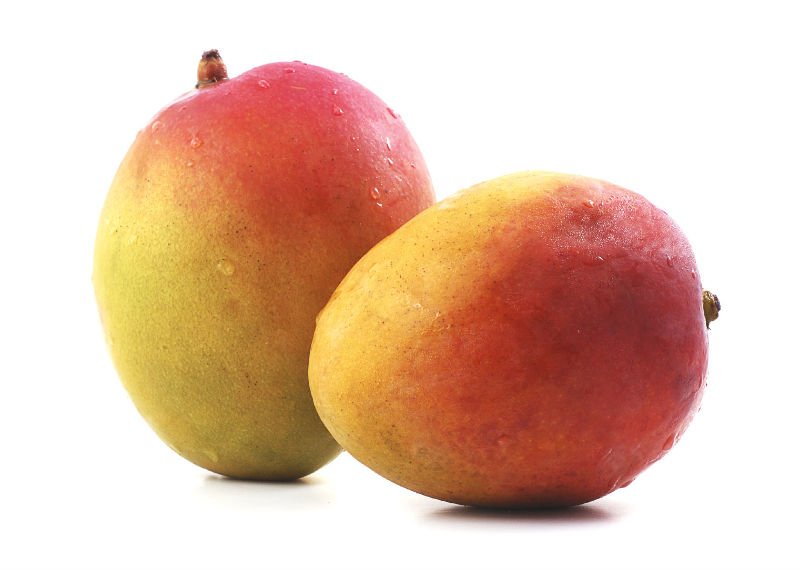
  • South India, Hyderabad in particular, is famous for this variety.
  • Neelams come to the markets in May and last until the end of June.
  • Fruits are medium sized with soft, yellow and fibreless flesh.

Totapuri Mango

  • Its small green appearance and beak at the end of the fruit resembles a parrot, hence its name.
  • It’s acceptable to eat the skin of this variety.
  • This variety is a bit crunchy and tangy, best served with salt and chili powder.

Mallika Mango

  • Hybrid of the Neelam and Dasheri mangoes.
  • Its orange pulp is of excellent quality thanks to its pleasant honey sweetness.
  • Proud winner of the Fairchild Tropical Garden Best of Show award for taste.
  • Mallika’s season lasts from June to July.

If I talk numbers, India is the largest producer of Mangoes with almost 36% of the world’s production. But let’s not let numbers spoil the divine taste.

Personally, I am yet to find a person who doesn’t like mangoes. Even though high in calories, mangoes are worth your craving.

Come on friend, Go and Grab one now!!! Happy Eating. 

Tuesday, 26 May 2015

Kitchen of India - Exotic Spices

One thing which is common among us Indians is: Our Love for Food!

Each and every state has its own set of cuisines and flavors. And as we all know: Best way to understand a place is through its culinary culture.

Be it spicy Biryani from Hyderabad, Daal-Baati Churma from Rajasthan, Macher Jhol from West-Bengal or amazing Kashmiri Pulao, each and every cuisine is unique in its aroma and taste. Each of our states has a unique culinary story to tell.

But if we dig deeper, there is one thing which makes these cuisines delectable – its Ingredients. 

“The Kitchen of India” has ample number of rare ingredients which are cherished by Chefs, all over the world.

Let’s take a step further and get on a journey to explore different varieties of ingredients commonly found in India.

In our quest of better understanding a typical Indian Kitchen, the first and most important set of ingredients which comes to my mind is – Exotic Spices of India.

Let’s learn where to find and how to use them in detail:

Saffron
    • Saffron is the most expensive spice in the world.
    • Fortunately, only a small amount of it is required to impart its beautiful color and flavor to food.
    • It is used in many Spanish and Indian cuisines, mainly Seafood Paella, Biryani etc.
        Black Cardamom or Badi Elaichi
    • Also known as Queen of Spices.
    • Its seed pods have a strong camphor-like flavour.
    • It is commonly used in many Indian, Nepalese, Bhutanese and Chinese dishes.
Red Chilli Powder
    • Also known as King of Spices.
    • It is used to add pungency and flavour to dishes.
    • It is used in many different cuisines, including Tex-Mex, Indian, Chinese, and Korean.
Amchoor

    • It is a fruity spice-powder made from dried, unripe green mangoes.
    • Commonly used as a souring agent in Indian cuisines.
Carom seeds or Ajwain
    • Mainly produced in Rajasthan in India, Ajwain has many health benefits as well.
    • Primarily, it helps in digestion and cough & asthma.
    • Commonly used in cuisines in India and Afghanistan.
Long Pepper
    • It is mainly used in European, Indian, Nepalese, Indonesian, Malaysian and North African cuisines.
    • It has similar, but stronger taste than black, green or white varieties of pepper.
Nigella seeds or Kalonji
    • It has a pungent - bitter taste and smell.
    • It is used primarily in confectioneries and liquors. Peshawari naan is topped with kalonji seeds.
Cumin seeds or Jeera
    • Cumin can be used ground or as a whole seeds.
    • It helps to add an earthy and warming feeling to food.
    • Mainly used in South Asian, Brazillian and Latin American cuisines.
Asafoetida or Hing
    • It typically works as a flavour enhancer.
    • This spice is a digestive aid and is used in food and pickle as a condiment.
Cinnamon or Dalachini
    • Mainly is used in preparation of Chocolate and dessert recipes.
    • Cinnamon flavored tea, is consumed as a hot beverage in Bangladesh, India and Pakistan.
Being an Hotelier in India, it’s our duty to learn about these ingredients, experiment with them and add them to our recipes.

Let’s take our guests to a culinary journey and let them rediscover the meaning of Indian food. Let’s make them fall in love with Indian Kitchen all over again.

Stay tuned for next article in this series – Exotic Fruits and Vegetables in India.

Till then – Bon Appetite!!!