When I was a kid, I used to wait for summers only for two
reasons – Long Summer Vacation and Yummy Juicy Mangoes.
Mango, King of Fruits and National fruit of India, is known
for its luscious taste.
Apart from their delicious taste, mangoes are also known for
their cultural values and importance. Mango leaves are used to decorate doors
in Indian houses during festivals. Dried Mango skins are used to produce
Ayurvedic medicines.
Mango is also known for its usage in countless number of
cuisines. Sour and unripe mangoes are used in Pickles. Mango pulp is used for
making jellies and jams. Dried and powdered unripe mango is used for moramba,
amchur. Liquid form of mango, example - Aam panna, Aamras, Mango Lassi etc., is
also equally famous for its taste and nutritional values.
India is home to more than 500 varieties of Mangoes. Let’s
learn about a few famous sub-categories, where to get and how to use them.
Alphonso
Mango

- One of the most expensive, yet beloved, variety of Mango in India and abroad.
- This variety grows in Maharashtra, Gujarat and Karnataka.
- Used mainly for pulping and canning.
- Its firm yet fibreless pulp ensures a smooth creamy taste while still maintaining its integrity when cut.
Chaunsa
Mango

- Its name was given by Sher Shah Suri, as this was his favourite, it’s hailed as “The King of Mangoes.”
- This variety grows in North India, starting from early June through the end of August.
Dasheri
Mango

- Dashehari mangoes are one of the “Mother” mango varieties in the country.
- Mainly cultivated in Northern India. Lucknavi (Lucknow based) Dashehari is famous across the globe.
- Fruits are medium sized, with pleasant flavour, sweet, firm and fibreless pulp.
Banganapalli
Mango

- This mango is Andhra Pradesh’s prime variety. Also available in Tamil Nadu.
- Mainly used for canning.
- Its fruits are large sized, weighing on an average 350-400 g, with fibreless pulp.
Langda
Mango

- Langda mangoes are primarily native of Varanasi, UP.
- The fruit is green on the outside, which might give you the impression that it’s not ripe. But you can’t be more wrong.
- It has a short season, lasting from mid to the end of July.
- It has a very distinctive taste and not over sweet.
Himsagar
Mango

- This variety grows in West Bengal and Orissa.
- Himsagars come to season from mid-June until the end of the month.
- It’s a thin-skinned cultivar with smooth, silky flesh.
Kesar
Mango

- It comes from Gujrat.
- Yellow with a tinge of green on the outside, Kesar mango is famous for its subtle taste.
- Ideal for pulping and juice concentrates.
Neelam
Mango
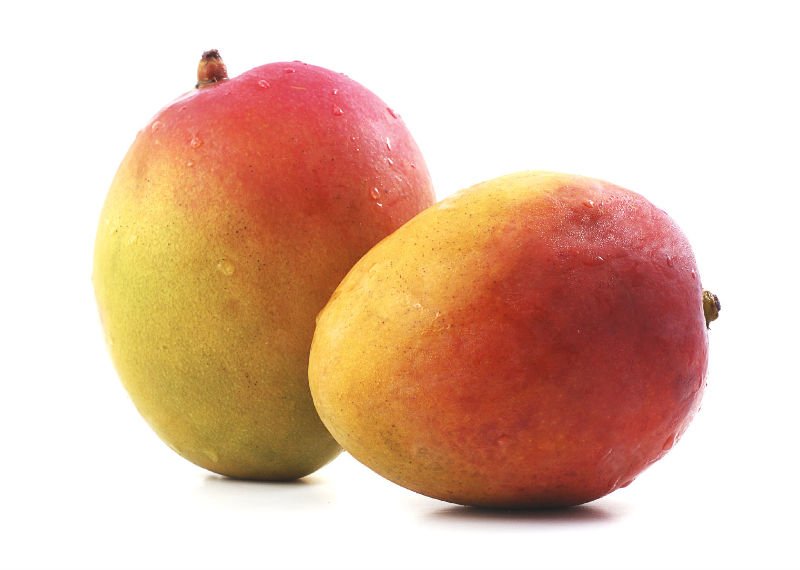
- South India, Hyderabad in particular, is famous for this variety.
- Neelams come to the markets in May and last until the end of June.
- Fruits are medium sized with soft, yellow and fibreless flesh.
Totapuri
Mango

- Its small green appearance and beak at the end of the fruit resembles a parrot, hence its name.
- It’s acceptable to eat the skin of this variety.
- This variety is a bit crunchy and tangy, best served with salt and chili powder.
Mallika
Mango

- Hybrid of the Neelam and Dasheri mangoes.
- Its orange pulp is of excellent quality thanks to its pleasant honey sweetness.
- Proud winner of the Fairchild Tropical Garden Best of Show award for taste.
- Mallika’s season lasts from June to July.
If I talk numbers, India is the largest producer of Mangoes
with almost 36% of the world’s production. But let’s not let numbers spoil the
divine taste.
Personally, I am yet to find a person who doesn’t like
mangoes. Even though high in calories, mangoes are worth your craving.
Come on friend, Go and Grab one now!!! Happy Eating.

